Vietnam’s dairy market is entering 2026 with several notable developments. Alongside continued room for growth, consumer demand is gradually shifting toward products that place greater emphasis on health, nutritional value, and the specific needs of different consumer groups.
As the market becomes increasingly competitive and consumer needs grow more specific, opportunities for businesses extend beyond simply expanding their product portfolios. The nutritional value delivered by each product is also becoming an increasingly important consideration in product development.
So, what trends are shaping Vietnam’s dairy industry in 2026, and what role can micronutrient fortification play in this transition?
1. Vietnam’s dairy market still has room for growth
According to compiled market data, Vietnam’s dairy industry was valued at approximately USD 5.71 billion in 2024 and is projected to reach USD 13.37 billion by 2033, representing a compound annual growth rate (CAGR) of approximately 9.5% between 2025 and 2033. While these figures reflect a long-term forecast, they indicate that the market’s growth outlook remains positive.
In the domestic market, dairy revenue exceeded VND 133 trillion in 2025. However, Vietnam’s average per capita milk consumption currently stands at only around 28-29 liters per person per year, lower than in several other markets across the region.
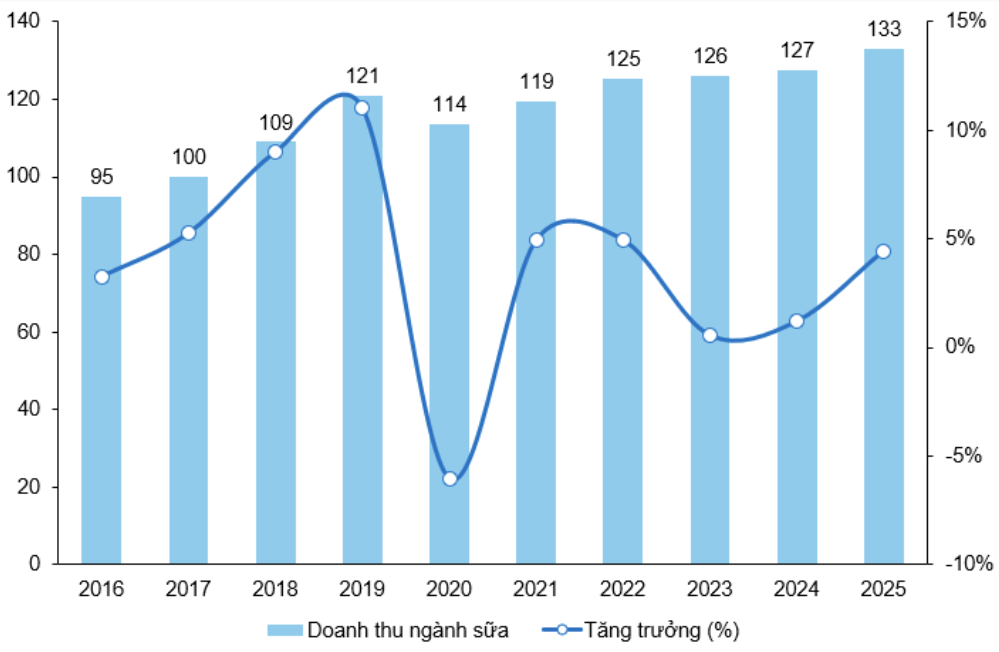
The combination of an expanding market and relatively low per capita consumption suggests that there is still considerable room for growth. However, the market is also becoming increasingly segmented as consumers have more choices and higher expectations for dairy products.
2. Demand is shifting toward specialized nutrition
One of the key trends shaping Vietnam’s dairy market is the growing development of products designed to address specific nutritional needs.
According to Vietstock’s overview of the dairy industry outlook for 2026, population aging, the rising prevalence of non-communicable diseases, and greater health awareness are supporting demand for specialized nutrition products.
Rather than relying on one-size-fits-all formulations, the market is seeing a growing range of products developed for specific consumer groups and nutritional purposes, including nutrition for children and older adults, medical nutrition, products for special dietary needs, lactose-free products, and solutions designed to support digestive health.
This also reflects a broader shift in consumer behavior: consumers are no longer simply interested in “drinking milk,” but are increasingly considering how a product aligns with their specific nutritional needs.
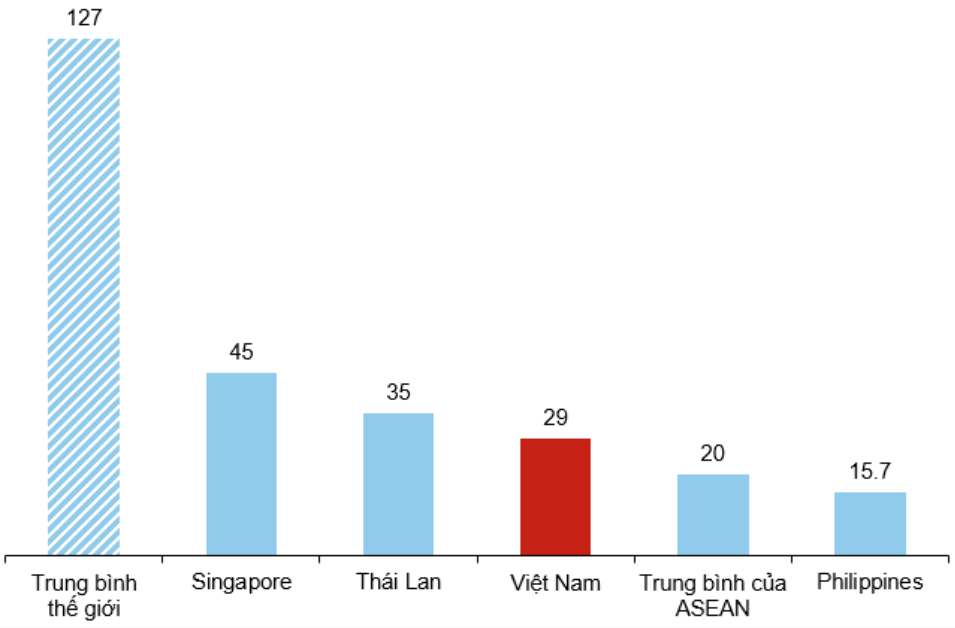
Vietnam currently records per capita milk consumption of approximately 29 liters per year, compared with around 35 liters in Thailand and 45 liters in Singapore. This gap not only indicates room for further consumption growth but also creates opportunities for businesses to diversify their product portfolios to serve a broader range of consumer groups.
3. Premiumization: Consumers are looking for more than simply “adequate nutrition”
Alongside increasingly differentiated consumer needs, the trend toward premiumization is also becoming more evident across certain market segments.
The infant formula market is particularly noteworthy. According to market data compiled from IMARC Group, Statista, the Vietnam Dairy Association, Metric.vn, Euromonitor, and corporate financial reports, the segment grew by approximately 40% in the first nine months of 2025, reaching VND 3.2 trillion. Sales volume reached approximately 4.8 million units, representing an increase of 23%.
The gap between growth in sales value and sales volume is a notable indicator of the shift toward higher-value products.
All price segments above VND 600,000 recorded growth of more than 30%, while products priced above VND 900,000 grew by approximately 77%. At the same time, new product formats also expanded rapidly, with ready-to-drink milk products alone recording growth of 131%.
These figures suggest that consumers are increasingly taking a broader view of product value. For some consumers, product choices are influenced not only by brand or price, but also by formulation, ingredients, and the ability to address specific nutritional needs.
4. Beyond infant formula: Health-driven demand is expanding across multiple segments
Nutrition-focused trends are not limited to infant formula.
In the yogurt segment, manufacturers are developing products with higher protein content, natural ingredients, and a greater focus on digestive health. Yogurt and other fermented dairy products are also expected to continue growing in retail value.
Plant-based milk is another notable segment. Demand is being supported by health-conscious consumption trends and consumers with lactose intolerance, while manufacturers continue to improve formulations with lower sugar content and higher protein levels.
These developments point to a common direction: products are increasingly being developed around specific consumer needs rather than solely around traditional product categories.
For businesses, this creates opportunities to develop formulations with clearer nutritional value propositions that are better suited to the needs of different consumer groups.
5. What role can micronutrient fortification play in this trend?
As dairy products are increasingly developed around the nutritional needs of specific consumer groups, micronutrient fortification is becoming an approach that businesses can consider from the early stages of product development. Iron, calcium, zinc, magnesium, and a range of other vitamins and minerals can contribute to enhancing nutritional value while supporting the development of products tailored to different target groups.
However, micronutrient fortification is not simply a matter of adding another ingredient to a formulation. Different consumer groups have different nutritional requirements, while product formats such as liquid milk, milk powder, and nutritional beverages each have their own characteristics in terms of composition, processing conditions, and storage requirements.
Therefore, from the research and development stage, businesses need to determine not only which micronutrients to incorporate, but also which micronutrient sources are best suited to the nutritional objectives and characteristics of the final product. This is an important step in ensuring that nutritional value is appropriately integrated into the product rather than simply adding more ingredients to the formulation.
6. Ingredient supply chains remain an important consideration
Alongside changing consumer demand, Vietnam’s dairy industry continues to face challenges related to ingredient supply.
According to data compiled from the Vietnam Dairy Association, domestic milk production currently meets only around 40% of demand. In 2025, imports of milk and dairy products reached approximately USD 1.44 billion, an increase of more than 27% compared with the previous year, with milk powder and skimmed milk powder accounting for approximately 50% of the total.
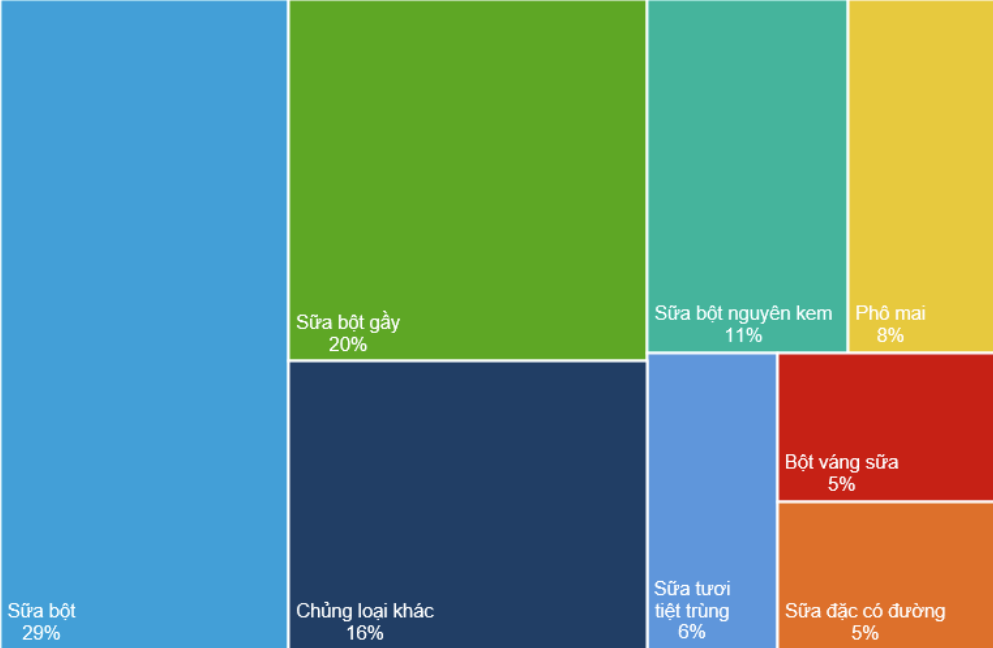
This indicates that securing a reliable and consistent ingredient supply remains an important factor in the industry’s development. For businesses developing nutritional products, ingredient selection is therefore not solely a question of functionality. Supply stability, technical standards, and compatibility with manufacturing processes also need to be taken into consideration.
7. Competition is shifting from “what products are available” to “what value does the product deliver?”
Vietnam’s dairy market in 2026 is undergoing several notable shifts. Alongside continued market expansion, with domestic revenue exceeding VND 133 trillion in 2025 and average per capita consumption reaching approximately 29 liters per year, consumer demand is also becoming increasingly diverse across age groups, lifestyles, and nutritional needs.
The growth of specialized formula products, nutrition products for older adults and children, health-focused yogurt, lactose-free products, and plant-based milk reflects this changing landscape. Consumers are no longer simply looking for dairy products to supplement their daily nutrition; they are increasingly paying attention to the specific benefits and nutritional value that a product can deliver.
For businesses, this means that simply introducing more new products may not be enough to create meaningful differentiation. More importantly, businesses need to identify which consumer groups their products are designed for, which nutritional needs they aim to address, and which values should be clearly reflected in the formulation. In this context, micronutrient fortification can be considered one approach to supporting the development of products that better align with the market’s increasingly specialized nutritional needs.
8. From micronutrient fortification to selecting the right solution
As nutritional needs become increasingly diverse, micronutrient fortification should also be considered as part of the product development process, rather than simply as the addition of iron, calcium, zinc, magnesium, or vitamins to a formulation.
Each product has different requirements in terms of composition, manufacturing processes, storage conditions, and consumer experience. Selecting an appropriate micronutrient source therefore requires consideration of multiple factors, including stability, bioavailability, potential effects on taste and color, and suitability for different product applications.
This places increasingly high demands on the research and development process. Businesses need not only to identify the micronutrients that align with their nutritional objectives, but also to select ingredient solutions that can effectively meet the practical requirements of the final product.
As the dairy market continues to evolve toward increasingly specific nutritional needs, TA Vital will continue to monitor industry trends and share insights into micronutrient ingredient selection and application to support businesses throughout the product development process.
.png)
.png)





.jpg)






.jpg)

.jpg)



.jpg)


.png)
.png)
.jpg)
.jpg)







.jpg)

.jpg)


.jpg)
.jpg)


.jpg)




.jpg)





.png)







.jpg)




.jpg)