When sourcing ingredients, many businesses often rely on a COA (Certificate of Analysis) as the primary basis for quality evaluation. A complete documentation package containing a COA, Technical Data Sheet (TDS), and relevant certifications can easily create a sense of security before introducing ingredients into production.
In reality, however, many companies still encounter issues such as inconsistent product quality, unstable formulations, or unexpected costs during scale-up. So, is a COA alone truly enough to evaluate ingredient quality? This article highlights the critical factors that businesses often overlook when choosing ingredient suppliers.
1. What is a COA, and what does it reflect?
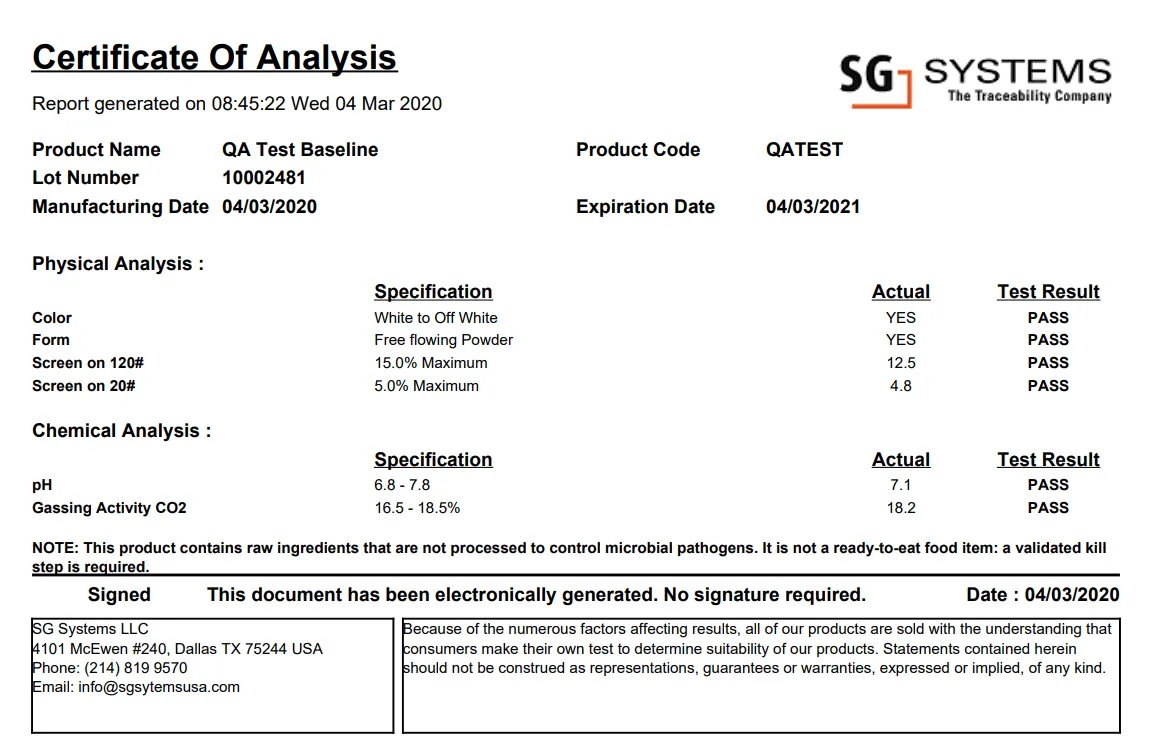
A COA (Certificate of Analysis) is a document provided by the manufacturer or an authorized laboratory to verify the quality of a specific batch of raw materials. Typically, a COA includes information such as the ingredient name, batch/lot number, manufacturing date, expiration date, and key test parameters—including purity, moisture content, active ingredient assays, microbiological limits, heavy metals, or other specific metrics depending on the material. This data helps businesses verify that the raw material meets established standards and serves as the foundation for incoming quality control (IQC).
However, a COA only reflects the testing results of a single batch at a specific point in time. This document does not guarantee batch-to-batch consistency, formulation compatibility, or raw material performance under actual manufacturing conditions. Relying solely on a COA to assess quality may cause businesses to overlook critical factors that directly impact production efficiency and final product quality.
2. Why a COA Alone is Not Enough
A COA only reflects the quality of a single batch
Each COA is issued for a specific batch of raw materials and represents the testing results at the time of sampling. This means a COA cannot guarantee that all future batches will have identical quality. For ingredients of natural origin—such as microalgae, plants, or fruits—variations in cultivation conditions, harvesting times, or manufacturing processes can lead to certain fluctuations between batches.
A COA does not reflect ingredient performance in a formulation
An ingredient that meets all parameters on a COA will not necessarily perform stably in the final product. Once introduced into a formulation, the ingredient can be affected by temperature, pH, light, oxygen, or interactions with other components. These factors can alter the color, flavor, stability, or overall quality of the product.

A COA cannot evaluate scalability
An ingredient may perform well during R&D or pilot trials, but it might not maintain the same performance when transitioning to large-scale production. If the supply is unstable or quality varies between batches, businesses will have to adjust formulations, re-test, or prolong production times. This process not only increases costs but also delays time-to-market.
A COA does not reflect the supplier's capabilities
Ingredient quality depends not only on the product itself but also on the capability of the supplier. A reputable supplier must possess key attributes that help minimize risks and ensure long-term manufacturing efficiency, such as securing a stable supply of raw materials, ensuring traceability, providing comprehensive technical dossiers, and being ready to support businesses during R&D, trials, and production.
3. Risks Businesses May Face When Relying Solely on a COA
Evaluating ingredients based only on a COA might save time in the initial phase, but it poses several risks when the product enters actual production.
Inconsistent product quality
If ingredient quality varies between batches without proper assessment, the color, flavor, or texture of the finished product may change. This makes it difficult for businesses to maintain product consistency and negatively impacts the consumer experience.
Increased R&D and production costs
When ingredients do not perform as expected in a formulation, businesses must conduct additional trials, adjust formulations, or re-test to ensure quality. These tasks drive up R&D costs and consume valuable time and resources.
Delayed time-to-market
Issues arising during production can force businesses to prolong testing or spend time troubleshooting before commercialization. This not only disrupts product launch plans but also reduces market competitiveness.
Increased compliance and quality control risks
For companies that export or operate in highly regulated sectors like food, cosmetics, and dietary supplements, a lack of stability data, traceability, or relevant technical documentation can create hurdles during quality assessments and in meeting regulatory requirements.
4. What Criteria Should Businesses Use to Evaluate Suppliers?
In an environment with rising quality expectations and faster product development cycles, businesses do not just need a supplier with complete technical files; they need a partner capable of ensuring stable ingredient performance in practice.
Batch-to-batch consistency
Differences between ingredient batches can directly affect the color, flavor, texture, and quality of the finished product. A reputable supplier should have a strict quality control process to guarantee consistency across production batches, helping businesses maintain product quality and mitigate manufacturing risks.
Stability data
Beyond the parameters on a COA, businesses should review the stability data of ingredients under various conditions such as temperature, light, pH, or storage. This is a critical foundation for R&D teams to evaluate the ingredient's compatibility in specific product formulations.
Traceability
Traceability allows businesses to verify ingredient origin, production processes, and quality control steps. This is not only a requirement in many markets but also enhances transparency and minimizes supply chain risks.
Technical documentation and regulatory compliance
A professional supplier should provide complete documentation, including COAs, Technical Data Sheets (TDS), Safety Data Sheets (SDS), and relevant certifications. A comprehensive documentation system helps businesses shorten ingredient evaluation times and meet both domestic and international market requirements.
Technical support capability
During R&D and production, businesses may encounter issues related to formulation or ingredient performance. A supplier with a dedicated technical team and application expertise will help businesses optimize formulas, troubleshoot issues, and accelerate time-to-market.
5. How TA Vital Supports Your Business
At TA Vital, we understand that a high-quality ingredient must not only meet the specifications on a COA but also perform stably throughout research, production, and commercialization. Alongside supplying microalgae-based ingredients, TA Vital partners with businesses by providing comprehensive technical dossiers, stability data, traceability, and batch-to-batch quality control processes.
TA Vital's technical team also assists businesses in ingredient evaluation, formula optimization, and troubleshooting during scale-up. This helps businesses not only shorten their R&D timelines but also minimize risks when bringing products to market.
Committed to being a dedicated partner, TA Vital goes beyond merely supplying ingredients to deliver solutions that help clients develop products efficiently, stably, and in alignment with rising market standards.
6. Conclusion
A COA is an important document in ingredient quality evaluation, but it should not be the sole decision-making criterion. To minimize risks in R&D, production, and commercialization, businesses must conduct a comprehensive evaluation—from batch-to-batch consistency, stability data, and traceability to the supplier's technical support capabilities.
With our expertise in microalgae-based ingredients, TA Vital not only provides products that meet quality requirements but also accompanies businesses with technical documentation, application data, and support solutions throughout the product development journey.
If your business is looking for a stable supply of raw materials and a reliable partner to optimize R&D and production, contact TA Vital today for tailored solutions and further technical information about our products.

.png)
.png)




.jpg)




.jpg)

.jpg)


.jpg)


.png)
.png)
.jpg)
.jpg)





.jpg)

.jpg)


.jpg)
.jpg)


.jpg)




.jpg)




.png)







.jpg)



.jpg)